
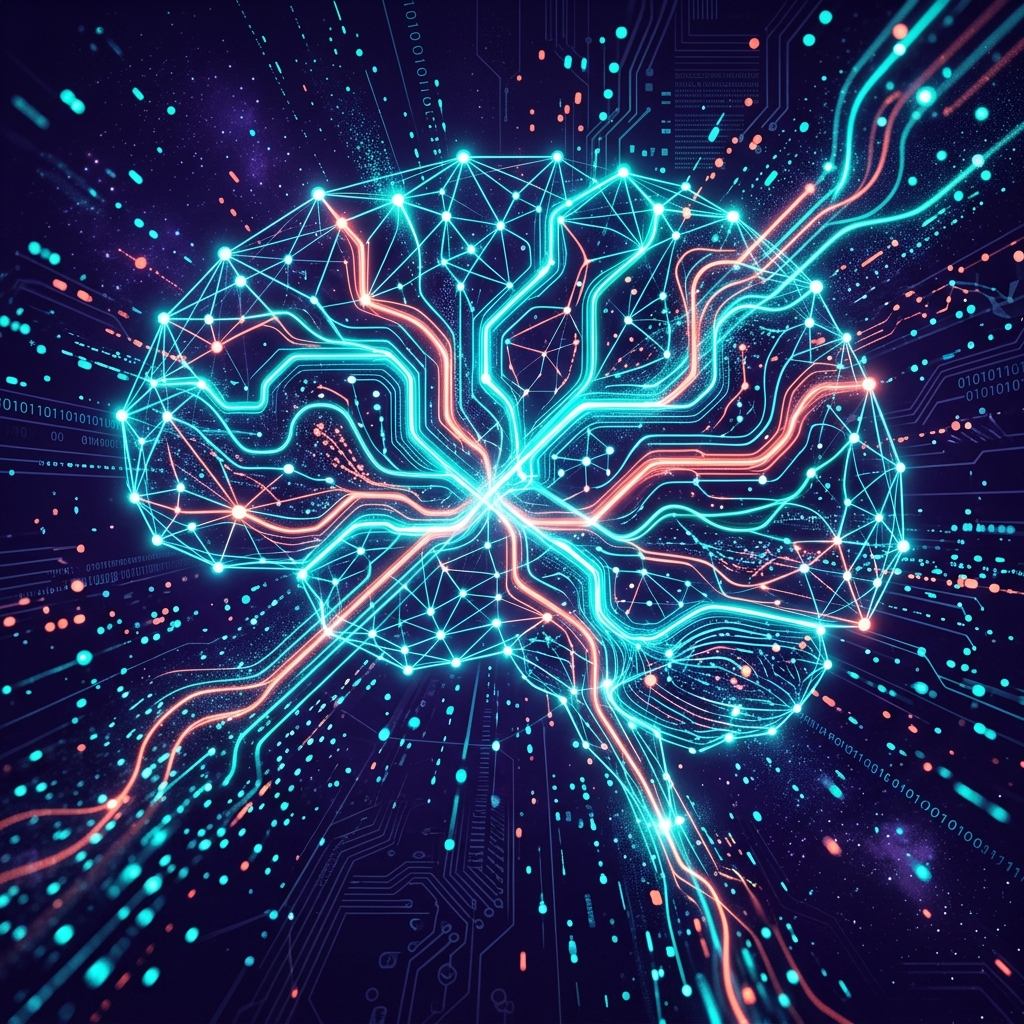
Machine vision has evolved from simple pattern matching to multi-modal reasoning. By mimicking the deep, interconnected, and vibrant neural pathways of biological brains, modern models process visual arrays not just as pixel grids, but as semantic, conceptual networks.
1. The Semantic Layer
Early computer vision algorithms relied on edge detection and local feature descriptors. When a neural network looks at a scene today, it maps visual tokens directly into a shared semantic latent space. A photo of a gold elephant is not just recognized as "an animal" or "metallic colored"; it is understood in context—triggering concepts of mythology, weight, structure, and artistic expression.
"Neural paths do not just calculate; they associate. A vibrant path is one that establishes high-dimensional linkages across modalities, enabling true contextual comprehension."
2. Visual Reasoning at the Edge
Historically, running multi-billion parameter multi-modal models required high-latency cloud servers. Today, modern mobile hardware compiles neural pathways directly onto neural engines. This shift to on-device reasoning brings latency down to milliseconds.
For applications in augmented reality and robotics, this means visual changes can be processed, mapped, and responded to instantly, preserving battery life and securing user privacy.
3. The Fusion of Elephant and Dragon
In designing neural paths, developers often encounter a tradeoff between memory capacity (the elephant) and processing velocity/creativity (the dragon). Modern architectures resolve this through specialized attention networks. A sparse Mixture of Experts (MoE) model allows the network to keep a massive database of knowledge dormant, activating only the exact "neural clusters" required for the task at hand.
This hybrid mechanism ensures that application interfaces stay fast and responsive while possessing access to rich, human-like cognitive reasoning.
Conclusion
We are only at the beginning of the machine vision revolution. As neural pathways become more dense, semantic, and efficient, the distinction between "seeing" and "understanding" will completely fade away, paving the way for applications that perceive the world with the same nuance and vibrancy as we do.